Does a Brow Lift Leave a Scar? A Comparison of Modern Techniques
The eyebrow and forehead areas play an important role in facial expression and are among the areas where signs of aging may become noticeable over time. A low eyebrow position can make a person look tired, sad, or older than they actually are.
Thanks to advances in aesthetic surgery, a brow lift can now be performed using different techniques depending on the patient's facial anatomy, eyebrow structure, skin elasticity, and aesthetic expectations.
One of the most common concerns among patients researching brow lift surgery in Adana is whether the procedure will leave a visible scar. So, does a brow lift leave a scar? Which techniques result in less visible scars?
In this article, we discuss different brow lift techniques, incision locations, scar visibility, and the healing process in detail.
Does a Brow Lift Leave a Scar?
Yes. Since a surgical incision is made during the procedure, some degree of scarring is technically expected after any surgery. However, the visibility of a brow lift scar can vary depending on the surgical technique, incision location, individual skin characteristics, and the body's natural healing process.
Modern brow lift techniques aim to place incisions within the scalp or along natural anatomical boundaries whenever possible. This approach can help minimize the visibility of surgical scars.
Choosing the appropriate technique for the individual patient, carefully closing the surgical incisions, and following postoperative care recommendations can help scars become less noticeable over time.
Comparison of Brow Lift Techniques and Scarring
There is no single surgical technique suitable for every brow lift patient. The appropriate method is selected based on the patient's eyebrow structure, forehead proportions, skin elasticity, hairline, and the amount of lifting required.
1. Endoscopic Brow Lift
Endoscopic brow lift is a modern surgical technique performed through small incisions. During the procedure, several small incisions are made within the scalp, allowing the surgeon to access the forehead and eyebrow area with the assistance of a camera.
- Incision location: Small incisions within the scalp
- Scar visibility: Generally low
- Main advantage: Small incisions and endoscopic visualization
Because the incisions are placed within the scalp, brow lift scars may be difficult to notice from the outside in appropriately selected patients.
2. Gliding Brow Lift
Gliding Brow Lift is a surgical approach based on releasing the tissues of the forehead and eyebrow area and repositioning them in a higher position.
The incision pattern and surgical approach may vary according to the patient's anatomy. When incisions are placed within the scalp, the visibility of postoperative scars may be minimized.
- Incision location: Within the scalp
- Scar visibility: Generally low
- Main advantage: Repositioning the tissues upward
3. Temporal Brow Lift
Temporal brow lift is a technique that may be used particularly to address drooping in the outer portion or tail of the eyebrow.
The incisions are generally placed within the scalp in the temple area. Therefore, in appropriately selected patients, surgical scars may have very low visibility.
- Incision location: Scalp in the temple area
- Scar visibility: Generally low
- Main advantage: Particularly effective for lifting the outer part of the eyebrow
4. Traditional (Coronal) Brow Lift
In a traditional or coronal brow lift, a longer incision is made within the scalp, generally extending from one side of the head toward the other. With the increasing use of modern techniques requiring smaller incisions, this method is now reserved for selected patients.
- Incision location: A longer incision within the scalp
- Scar visibility: Can be concealed within the hair but the incision is longer
- Main advantage: Allows more extensive tissue repositioning
Whether this technique is appropriate depends on factors such as the patient's hairline, hair density, forehead structure, and the extent of correction required.
5. Direct Brow Lift
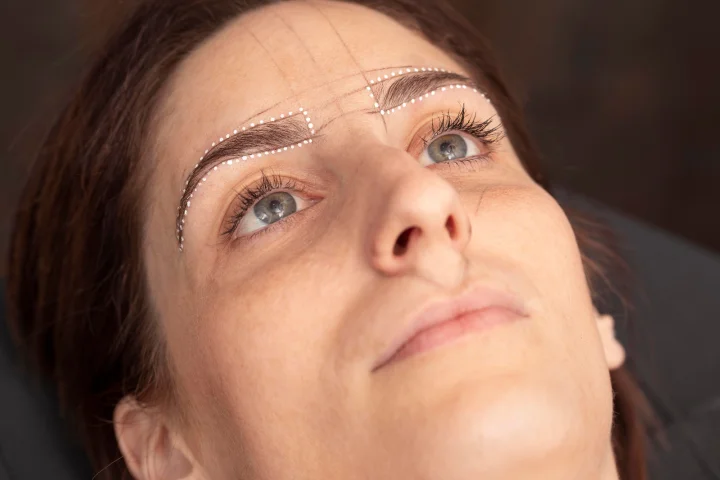
Direct brow lift is performed by removing excess skin directly above the eyebrow and repositioning the eyebrow upward.
- Incision location: Immediately above the eyebrow
- Scar visibility: May be more noticeable than with other techniques
- Main advantage: Allows direct repositioning of the eyebrow
Since the incision is located directly above the eyebrow, patients should be carefully evaluated regarding their expectations about postoperative scarring. The final appearance of the scar can vary depending on the individual's healing characteristics.
How Is the Appropriate Brow Lift Technique Determined?
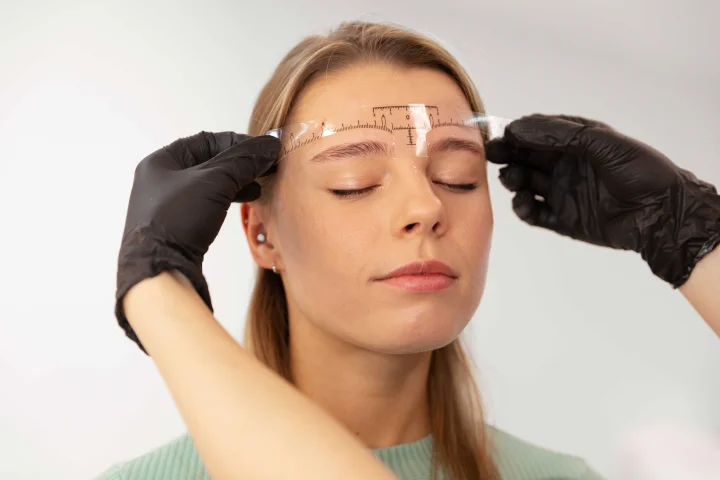
The technique used for brow lift surgery is not the same for every patient. Surgical planning involves more than simply determining whether the eyebrows are low. The patient's overall facial anatomy and aesthetic expectations are also taken into consideration.
Endoscopic, Gliding, and Temporal Techniques
Endoscopic, gliding, and temporal brow lift techniques, which can be performed through smaller incisions, may be considered for patients with mild to moderate eyebrow drooping and suitable scalp and hair characteristics.
The ability to place the incisions within the scalp can be an important advantage in minimizing the visibility of postoperative scars.
Traditional and Direct Techniques
Traditional or direct brow lift techniques may be considered for patients with more advanced skin and tissue laxity or for those who require a different surgical approach.
Since the incision in a direct brow lift is located immediately above the eyebrow, the patient's expectations, skin characteristics, and potential scar visibility should be carefully evaluated.
What Factors Affect Brow Lift Scar Visibility?
The appearance of a postoperative scar is not determined solely by the surgical technique. Individual biological characteristics and postoperative care can also play an important role in the final appearance of the scar.
1. Skin Type and Genetic Factors
Some individuals may be more prone to developing prominent, raised, or discolored scars as part of the wound-healing process. Previous surgical scars or other significant scars can provide useful information when evaluating a patient's healing tendencies.
2. Smoking
Smoking can negatively affect tissue blood flow and may delay wound healing. For this reason, it is important to follow your surgeon's recommendations regarding smoking before and after surgery.
3. Sun Protection
Direct sun exposure during the healing period may make discoloration in healing tissues more noticeable. Therefore, appropriate sun protection should be used for the period recommended by your surgeon.
4. Surgical Technique and Wound Closure
The placement of the incision in an appropriate anatomical area, proper management of tissue tension, and careful surgical wound closure are among the factors that can influence the final appearance of a brow lift scar.
When Do Brow Lift Scars Become Less Noticeable?
Brow lift scars may appear more noticeable during the early postoperative period. As the scar tissue matures, its color and texture can gradually change, and the scar may become less noticeable over time.
The healing process varies from person to person, so it is not possible to provide an exact timeframe for the final appearance of a surgical scar. Your surgeon can provide more specific information based on the technique used and your individual healing characteristics.
Brow Lift Surgery in Adana
Brow lift surgery in Adana requires careful evaluation of the patient's facial anatomy and eyebrow structure. Surgical planning should focus not only on lifting the eyebrows but also on achieving a natural and harmonious appearance with the rest of the face.
Dr. Gökçen Oran evaluates signs of aging in the eyebrow and forehead area and plans appropriate surgical options according to each patient's facial anatomy and aesthetic expectations. The appropriate technique is determined during the consultation by assessing the eyebrow structure, forehead area, skin elasticity, hairline, and the amount of correction required.
What Should You Consider When Choosing a Brow Lift Surgeon?
Brow lift surgery is an aesthetic procedure that can directly affect facial expression. Therefore, it is important to consider not only the surgical technique but also the surgeon's experience, understanding of facial anatomy, and ability to create an individualized surgical plan.
- Detailed evaluation of facial and eyebrow anatomy
- Understanding the patient's aesthetic expectations
- Individual selection of the appropriate surgical technique
- Planning incisions in locations where scars can be concealed as much as possible
- Regular postoperative follow-up and care
Does a Brow Lift Leave a Scar? Summary
Because a surgical incision is required, some degree of scarring is expected after brow lift surgery. However, how noticeable the scar becomes depends on factors such as the surgical technique, incision location, individual skin characteristics, wound healing, and postoperative care.
Modern techniques such as endoscopic brow lift and other minimally invasive approaches may allow incisions to be concealed within the scalp, helping reduce the visibility of surgical scars. However, the most appropriate technique varies from patient to patient, and a specific method should not be selected solely based on the goal of avoiding scars.
If you are considering brow lift surgery in Adana, a consultation with a plastic, reconstructive and aesthetic surgeon is recommended to determine which technique may be appropriate for your facial anatomy and aesthetic goals.
Information and Contact for Brow Lift Surgery
If you would like to learn more about brow lift surgery and find out which technique may be suitable for your eyebrow structure and facial anatomy, you can contact Dr. Gökçen Oran for a personalized evaluation.
Visit the contact page to learn more about brow lift surgery and request a consultation.