Mini Tummy Tuck or Full Tummy Tuck? Which One Is Right for You?
If you are bothered by sagging and looseness in your abdominal area, you may be confused about choosing between a "mini tummy tuck" and a "full tummy tuck." Both are surgical procedures that tighten the abdominal area. However, each addresses a different need. In this article, I will compare the two techniques in a realistic way and explain which procedure may be suitable for whom.
Three Main Causes of Abdominal Contour Problems
- Excess skin: Skin that has stretched and sagged following weight loss or pregnancy
- Excess fat: Stubborn fat tissue that does not respond to diet and exercise
- Loose abdominal muscles: Muscle separation, particularly after childbirth, which causes the abdomen to protrude outward
The appropriate surgery is determined by identifying which of these three issues is most prominent in your case.
What Is a Mini Tummy Tuck?
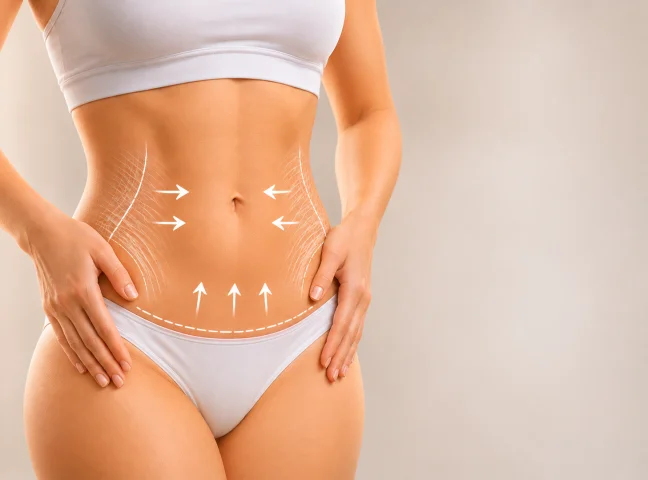
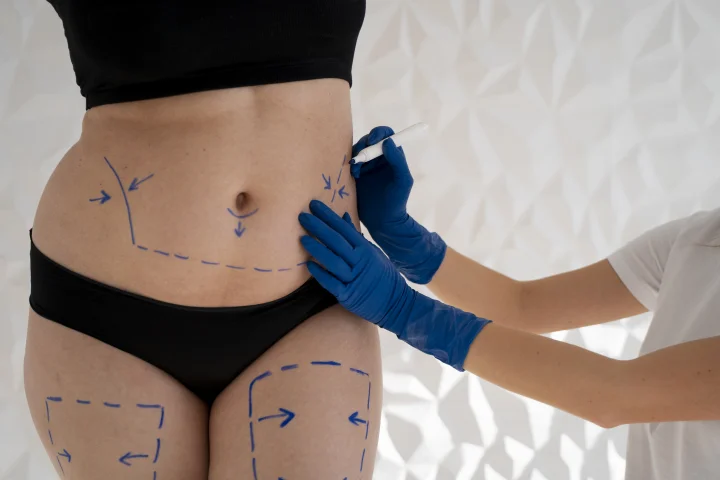
A mini tummy tuck is a targeted surgical procedure that focuses on the area below the belly button. The incision is usually kept short enough to remain within the underwear line. The belly button stays in its original position and is preserved as it is. Excess skin below the belly button is removed, and in many cases, fat is also reduced through liposuction. As a result, the lower abdomen achieves a flatter and firmer appearance.
A mini tummy tuck is a very good option for patients whose concerns are limited to the area below the belly button and who have excess skin in that region.
Advantages of a mini tummy tuck:
- The incision and resulting scar are smaller
- The operation generally takes less time
- The recovery process is usually more comfortable for most patients
- No intervention on the belly button is required, preserving its natural appearance
What Is a Full Tummy Tuck?
A full tummy tuck is a comprehensive surgical procedure that addresses the entire abdomen. The incision extends across the lower abdomen, between the hip bones. The skin and fatty tissue are lifted, and the belly button is released. This allows access to the abdominal muscles along their entire length, from below the belly button to above it, and separated muscles are repaired with sutures. Excess skin is removed, the remaining skin is pulled downward, and the belly button is repositioned in its new location.
If there is also a problem above the belly button, such as sagging, looseness, or muscle separation, a full tummy tuck is the solution that tightens the entire abdomen as a whole.
Advantages of a full tummy tuck:
- It improves both the upper and lower abdomen
- It repairs abdominal muscle separation (rectus diastasis) along its entire length
- It provides the most comprehensive results for patients with significant excess skin
- It creates a more noticeable change in the abdominal and waist contours
Things you should know about a full tummy tuck:
- The scar is longer (it is generally hidden beneath clothing)
- The surgery and recovery period are longer compared to the mini technique
- Swelling, bruising, and a feeling of tightness may occur during the first few weeks
Comparison: At a Glance
Mini Tummy Tuck
- Area treated: Below the belly button
- Incision length: Short
- Belly button: Remains in its original position
- Muscle repair: Preferred when muscle repair is not required
- Excess skin removal: Excess skin below the belly button
- Recovery: Generally shorter
Full Tummy Tuck
- Area treated: The entire abdomen
- Incision length: Longer
- Belly button: Repositioned
- Muscle repair: Performed along the entire length
- Excess skin removal: Excess skin throughout the abdomen
- Recovery: Longer
Which Technique Is Suitable for Which Patient?
The answer to this question is not "which one is better?" but rather "where does your abdomen need treatment?"
A mini tummy tuck is ideal for patients who:
- Have excess skin only below the belly button
- Do not have sagging or muscle separation above the belly button
- Are generally close to their ideal weight and need tightening in the lower abdomen
- Prefer a shorter scar and faster recovery
A full tummy tuck is ideal for patients who:
- Have abdominal muscle separation following childbirth
- Have sagging and looseness above the belly button as well
- Have developed extensive excess skin after weight loss
- Want to improve skin quality along with stretch marks and excess skin
My approach is simple: to recommend not the smallest possible operation, but the most appropriate operation that adequately addresses your needs. When the right technique is performed on the right patient, satisfaction is also higher.
What Should You Consider When Making Your Decision?
A consultation is the most appropriate first step. Your abdomen needs to be examined both while standing and lying down, and the condition of your muscles should be assessed manually. Whether muscle separation is present and how extensive it is can only be determined through an examination. Your personalized surgical plan is clarified in this way.
Your weight goals are important. If you are still planning to lose a significant amount of weight, it is generally better to plan surgery after reaching that goal. If you are considering another pregnancy, it is also advisable to determine the timing of surgery together with your doctor.
Quitting smoking supports recovery. In surgeries such as tummy tuck, where skin blood circulation is important, remaining smoke-free significantly facilitates wound healing. Quitting before and after surgery is recommended.
Realistic expectations increase satisfaction. A tummy tuck is not a weight-loss method. The aim is to tighten and reshape the abdomen and abdominal wall. As with every surgical procedure, there are risks such as infection, bleeding, fluid accumulation, wound-healing problems, and scarring. We discuss these openly before surgery.
Frequently Asked Questions
Which area does a mini tummy tuck tighten?
It tightens the area below the belly button. It provides very good results when excess skin is limited to this region. If there is also a problem above the belly button, a full tummy tuck tightens the entire abdomen together.
Does the belly button change during a mini tummy tuck?
The belly button remains in its original position. Its appearance may change slightly because the lower abdomen is pulled tighter.
Is liposuction alone sufficient?
If the only problem is excess fat, it may be sufficient. If there is also loose skin and weakened muscles, liposuction is planned together with a tummy tuck.
Will there be a scar after surgery?
Both techniques leave a scar. It is shorter with a mini tummy tuck and longer with a full tummy tuck. Scars gradually soften and fade over time.
How long does recovery take?
This varies from person to person. Returning to daily activities is generally quicker after a mini tummy tuck. After a full tummy tuck, strenuous physical activity must be avoided for a longer period. We will clarify your individual recovery timeline during your consultation.
Conclusion
A mini tummy tuck and a full tummy tuck are not simply the "small and large" versions of the same procedure. They are two different solutions designed for different needs. A mini tummy tuck is a targeted and relatively quick option for patients with excess skin below the belly button. If there is also a problem above the belly button, a full tummy tuck tightens the entire abdomen as a whole.
If you are wondering which procedure is suitable for your abdomen, we can discuss this clearly during a consultation.
Dr. Gökçen Oran, Specialist in Plastic, Reconstructive and Aesthetic Surgery
Tummy Tuck Surgery in Adana and Surrounding Provinces
For people considering a mini or full tummy tuck in Adana, the appropriate surgical technique is determined by evaluating excess skin, abdominal muscle condition, fat distribution, and individual expectations. Patients from nearby provinces such as Mersin, Hatay, Osmaniye, and Kahramanmaraş can also receive a personalized assessment from a specialist in plastic, reconstructive, and aesthetic surgery before undergoing a tummy tuck.
The choice between a mini tummy tuck and a full tummy tuck should be based not only on incision length but also on the specific needs of the abdominal area. A specialist examination is important to determine which technique is right for you.