How to Care for a Wound? What You Can Do at Home to Reduce Scarring
After surgery, a minor surgical procedure, or an injury that requires stitches, one of the first questions that may come to mind is: "Will I have a scar?" The honest answer is that every wound leaves some degree of scar as it heals. However, how noticeable the scar becomes depends on both your individual genetic tendency and how carefully you care for the wound during the first weeks and following months.
The answer to how to reduce the appearance of a scar largely depends on proper wound care after stitches. As a specialist providing patient care in the field of plastic, reconstructive and aesthetic surgery in Adana, we have prepared this guide to explain the simple and evidence-based steps you can follow at home.
The First 24–48 Hours After Stitches: Protect the Wound
Keeping the wound dry during the first day is important. When washing, take care not to wet the wound. If necessary, you can clean the surrounding area with a damp cloth. After the first 24 hours, a stitched wound can usually get slightly wet during a shower, but avoid soaking the wound in water for extended periods and stay away from swimming pools and the sea.
If the wound is on your arm or leg, keeping the affected area elevated can help reduce swelling. If the wound is on your face, keeping your head elevated with two or three pillows while resting may be beneficial. For swelling, you can apply a cold compress wrapped in a clean cloth for approximately 15–20 minutes at a time. Do not place ice directly on the wound.
How Should a Stitched Wound Be Cleaned? Daily Care and Keeping the Wound Moist
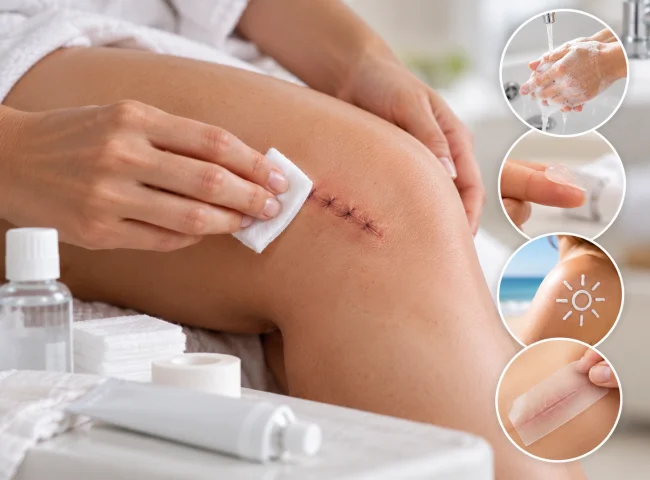
Once a day, after washing your hands thoroughly, gently clean the wound with mild soap and lukewarm water. Do not scrub the area. Pat it dry gently with a clean towel.
Products such as hydrogen peroxide and alcohol may irritate the wound and are therefore generally not recommended for routine wound care. Depending on the condition of your wound, your doctor may provide additional recommendations.
After cleaning, applying a thin layer of petroleum jelly can help keep the wound moist. A moist wound environment may support more efficient healing and help prevent the formation of a thick scab. If the wound is kept clean, antibiotic ointments are generally not necessary unless specifically recommended by your doctor.
You can then cover the wound with an appropriate wound dressing and change it regularly. If your doctor has given you different wound-care instructions, your doctor's instructions should always take priority.
Do not scratch or pick at any scab that forms on the wound. Allow it to fall off naturally.
When Should Stitches Be Removed?
The timing of stitch removal varies depending on the location and type of wound. For example, stitches on the face are often removed after approximately one week, while stitches in other areas of the body may remain longer. Your doctor will determine the appropriate timing.
Some stitches are absorbable and do not need to be removed. It is important not to postpone your follow-up appointment because leaving stitches in place longer than necessary may contribute to a more noticeable scar.
During this period, avoid movements that place tension on the wound, heavy exercise, and lifting weights for the period recommended by your doctor.
How Can You Reduce the Appearance of a Scar? Sun Protection and Silicone
After the wound has healed and the stitches have been removed, one of the most important aspects of scar care is sun protection. Ultraviolet radiation can cause a healing scar to become darker and more noticeable.
Use a broad-spectrum sunscreen with at least SPF 30 every day, stay in the shade whenever possible, and consider wearing a hat when outdoors.
With your doctor's approval, silicone gel or silicone sheets may help prevent scars from becoming thick and raised. Silicone products generally need to be used consistently for several months to achieve noticeable results.
Smoking can delay wound healing and negatively affect scar quality. Avoiding smoking, or at least reducing it during the healing period, can be beneficial for wound healing.
Signs of Infection at the Stitches: When Should You See a Doctor?
You should contact your doctor if you experience any of the following:
- Increasing redness, swelling, or pain instead of gradual improvement
- Purulent or cloudy discharge or an unpleasant odor coming from the wound
- Fever
- Opening of the wound edges or broken stitches
- Numbness or loss of movement around the wound
- Suspected presence of a foreign object in the wound
For wounds caused by an injury, make sure to inform your doctor about your tetanus vaccination status.
How Does a Scar Mature?
Scars may initially appear red and slightly raised during the first few weeks. This can be a normal part of the healing process.
Scars often begin to fade from around the third month, while complete scar maturation may take one to two years. Therefore, it is important not to judge the final appearance of a scar during the first few months.
The visibility of a scar varies from person to person because genetic factors play an important role. Two people who undergo the same procedure and follow similar wound-care routines may develop very different scars.
If you or your family have a history of thick, raised, or keloid scars, make sure to inform your doctor. Proper wound care can reduce the risk of problematic scarring, but it cannot completely change your genetic tendency.
Scar Treatment: What Are the Options If the Scar Remains Noticeable?
Some scars may remain thick, raised, or prominent despite appropriate wound care. If you have a history of keloids or hypertrophic scars, this should be discussed with a plastic surgeon before treatment.
Depending on the characteristics of the scar, a plastic surgery specialist may consider the following options:
- Steroid injections: These may be used for thick or raised scars.
- Energy-based treatments: Laser, light-based and radiofrequency treatments may help reduce redness and improve the texture of certain scars.
- Scar revision surgery: A surgical procedure designed to make a scar less noticeable. The goal is not to completely erase the scar, but to improve its integration with the surrounding skin.
These treatments are generally planned according to the characteristics and maturity of the scar. Rather than rushing into treatment, the most appropriate approach is to have an examination with a plastic surgery specialist and determine the most suitable option for your individual condition.
Frequently Asked Questions
When can a stitched wound get wet?
In many cases, the wound can get slightly wet during a shower after the first 24 hours. Avoid soaking the wound in water for prolonged periods and do not swim in pools or the sea. If your doctor has given you different instructions, follow those instructions.
How long does a stitched wound take to heal?
Superficial healing may generally take several days to two weeks, depending on the location and depth of the wound. However, complete scar maturation can take one to two years.
Will a scar disappear completely?
It is not possible to completely erase a scar. With proper wound care and, when necessary, appropriate scar treatments, a scar can gradually fade and become less noticeable as it blends with the surrounding skin.
Can petroleum jelly be applied to a stitched wound?
Unless your doctor has advised otherwise, applying a thin layer of petroleum jelly after cleaning the wound can help maintain a moist environment and support the healing process.
When should silicone gel be started?
Silicone gel or silicone sheets can generally be started once the stitches have been removed and the wound has completely closed, provided your doctor approves their use. Consistent use for several months may be necessary to see results.
When should I see a plastic surgeon for a scar?
If the scar becomes increasingly thick, raised, itchy, painful, or does not fade adequately over time, it may be beneficial to consult a plastic surgery specialist for an evaluation.
Conclusion
A stitched wound can often heal very well with proper care. Keep it clean, maintain an appropriate moist environment, protect it from the sun, and give it time to heal. If you have any concerns during the healing process, contact your doctor rather than waiting for your next scheduled appointment.
If you are concerned about your wound healing or would like to learn more about scar treatment options, you can schedule a consultation for plastic, reconstructive and aesthetic surgery in Adana.
This article is intended for general informational purposes and does not replace a medical examination. Always follow the wound-care instructions provided specifically by your doctor.