What Is a Liquid Facelift? Do Biostimulators Really Lift the Face?
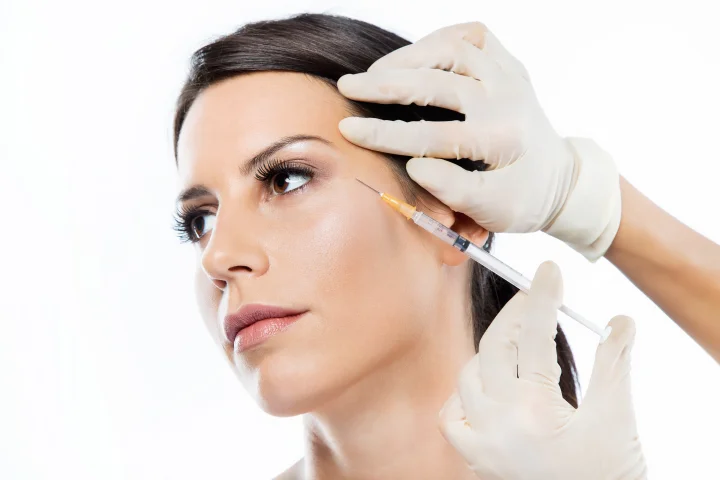
Liquid facelift has become a frequently used term in facial rejuvenation treatments in recent years. However, this term should not be considered the non-surgical equivalent of a traditional facelift surgery.
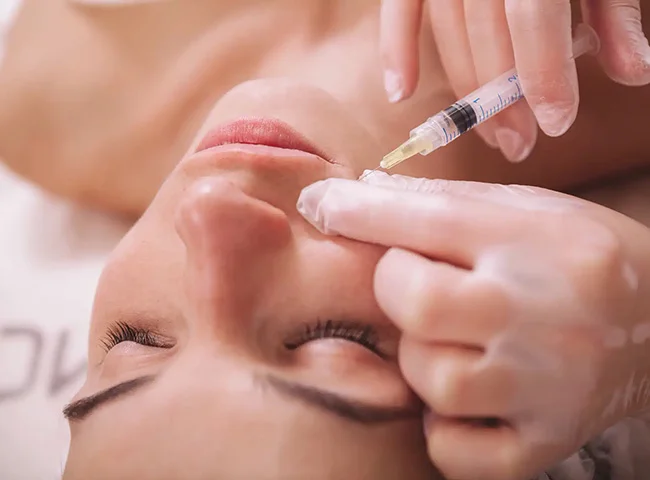
“Liquid facelift” does not refer to one specific and standardized medical procedure. In particular, collagen biostimulators such as PLLA, PDLLA and calcium hydroxylapatite (CaHA) are commonly associated with this concept.
The primary goal of these treatments is not simply to add volume to the face. Depending on the product and injection technique used, the treatment may aim to support skin quality, elasticity, wrinkle appearance and facial contours.
However, an important distinction should be made: biostimulator injections and surgical facelift procedures do not produce the same effect. Biostimulators may provide a more refreshed and youthful appearance in suitable patients, but they do not surgically reposition significantly sagging tissues.
What Is a Collagen Biostimulator?
Collagen biostimulators are injectable products designed to stimulate biological processes in the skin and support collagen formation and tissue remodeling over time.
Unlike traditional dermal fillers, the primary goal of biostimulation is not always to directly replace lost volume.
Potential objectives of biostimulator treatments include:
- Supporting skin quality
- Improving skin elasticity
- Helping reduce the appearance of fine lines and wrinkles
- Supporting facial contours
- Addressing certain age-related tissue changes
For this reason, biostimulators should not simply be considered another type of “filler.”
Which Products Are Used as Biostimulators?
Different types of biostimulator products may be used in facial rejuvenation treatments. Among the most commonly discussed are PLLA, PDLLA and CaHA.
- PLLA: Poly-L-Lactic Acid
- PDLLA: Poly-D,L-Lactic Acid
- CaHA: Calcium Hydroxylapatite
These products differ in their composition, mechanisms of action and application protocols. Therefore, it would not be accurate to assume that all biostimulators work in exactly the same way.
What Is PLLA?
PLLA (Poly-L-Lactic Acid) is a biocompatible and biodegradable material that has been used in facial rejuvenation treatments for many years.
The effect of PLLA cannot be explained solely by the initial volume created immediately after injection. A biological response may develop within the tissue, resulting in changes associated with collagen production and tissue remodeling over time.
Some clinical studies have reported improvements in dermal thickness, skin quality, wrinkle appearance and facial contours following PLLA treatment.
However, the quality of evidence varies between studies. Therefore, rather than stating that PLLA “definitively lifts the face,” it is more accurate to say that some studies have reported improvements associated with collagen remodeling and skin properties.
What Is PDLLA?
PDLLA (Poly-D,L-Lactic Acid) is a different derivative of the polylactic acid family. It is not identical to PLLA, and the characteristics of individual products may vary.
Studies involving PDLLA have reported improvements in skin quality, elasticity and overall facial appearance. However, because products and application techniques vary, the findings associated with PLLA should not automatically be applied to PDLLA.
Therefore, product selection should not simply be based on the question “Which one is stronger?” Instead, the important consideration is which product is appropriate for which purpose and which anatomical area.
What Is Calcium Hydroxylapatite (CaHA)?
Calcium hydroxylapatite (CaHA) is another biostimulator that may be used in facial rejuvenation treatments.
CaHA has two notable characteristics:
- It may provide a certain degree of initial volume and contour support in the treated area.
- Over time, it may stimulate a biological response in the tissue and contribute to changes associated with collagen production.
For this reason, CaHA may be considered in some cases for both volume support and biostimulation.
Clinical studies and systematic reviews investigating CaHA have reported positive findings regarding skin quality, elasticity, wrinkles and facial contours. However, the formulation of the product, application technique and study design may influence the results.
Do Biostimulators Really Lift the Face?
This is one of the most confusing aspects of the term “liquid facelift.”
Biostimulators may make the face look firmer, fuller or more lifted in some patients.
However, this change is not the same as the anatomical lifting performed during surgical facelift surgery.
Improvement in skin quality, collagen remodeling or volume support in specific areas may contribute to a younger-looking appearance. From the outside, this improvement may be perceived as a “lifted” appearance.
However, this does not involve surgically repositioning significantly sagging skin and deeper tissues.
Therefore, the most realistic answer to the question “Do biostimulators lift the face?” is: They may provide a more refreshed and youthful appearance in some patients, but they do not perform a surgical facelift.
Why Is It Called a “Liquid Facelift”?
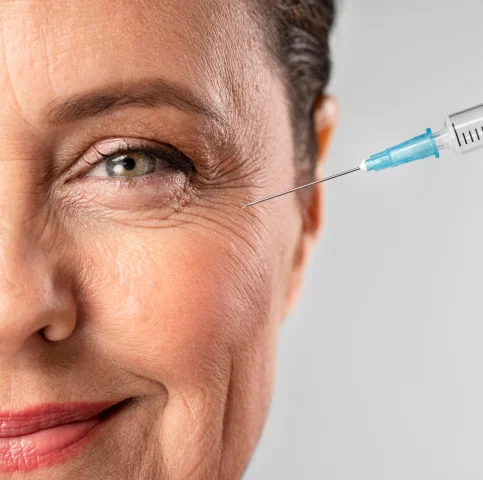
The term “liquid facelift” is generally used because facial rejuvenation can be performed through injections without surgical incisions.
When factors such as:
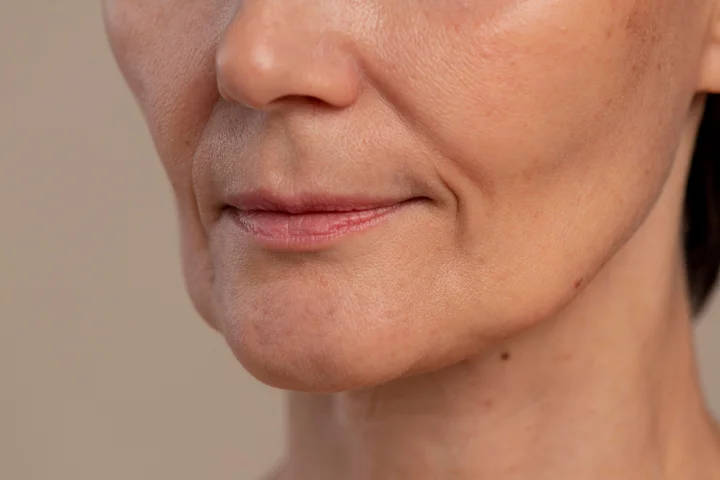
- Declining skin quality
- Loss of elasticity
- Mild changes in facial contours
- Volume loss in certain areas
are addressed together, the face may appear more balanced and youthful.
However, from a scientific perspective, “liquid facelift” does not describe one single standardized treatment. The product used, injection area, technique and desired outcome can all affect the results.
Can Biostimulators Replace Dermal Fillers?
Not always.
If the primary concern is significant volume loss, an appropriate dermal filler may provide a more direct solution.
For example, if there is volume deficiency in areas such as the cheekbones, chin or lips, dermal fillers can provide more direct volume support to the targeted area.
The purpose of biostimulators, however, is often not limited to adding volume.
In simplified terms:
- Significant volume loss → Dermal filler
- Skin quality and biological remodeling → Biostimulator
In clinical practice, these two approaches may also be considered together in selected patients.
Which Areas Can Be Treated with Biostimulators?
Depending on the product and injection technique, biostimulators may be considered for different areas of the face.
- Cheeks
- Cheekbone area
- Jawline
- Temples
- Lower face
- Neck in selected cases
However, not every product is suitable for every anatomical area. Particularly in areas where the facial vascular and nerve anatomy is complex, treatment planning should be performed carefully by an experienced physician.
When Do the Effects of Biostimulators Become Visible?
The full effect of biostimulator treatments usually does not appear immediately after a single session.
Changes seen during the first few days may partly be related to:
- Injection-related swelling
- Tissue edema
- The initial volume effect of the product
The biological changes associated with treatment may take longer to develop. Therefore, several weeks or longer may be needed to properly evaluate the results of a biostimulator treatment.
With products such as PLLA, the effect is generally expected to develop gradually.
How Long Do Biostimulator Results Last?
There is no single duration that applies to every patient.
The product used, amount injected, treatment area, individual skin characteristics and injection technique can all affect the outcome.
Some clinical studies have reported that the effects associated with PLLA can persist for a considerable period of time. However, these durations should not be interpreted as a guaranteed duration for every patient.
Who May Be a Suitable Candidate for Biostimulators?
Biostimulator treatments may be considered particularly for individuals who:
- Have begun to experience age-related skin changes
- Have mild to moderate loss of elasticity
- Have experienced changes in facial contours over time
- Have mild volume loss in certain areas
- Prefer to avoid surgical procedures
However, treatment should not be determined based solely on age. Two people of the same age may have completely different facial anatomy, skin characteristics and patterns of aging. Individual assessment is therefore essential.
When May Biostimulators Not Be Enough on Their Own?
For individuals with significant excess skin or advanced facial and neck sagging, it is not realistic to expect an injection treatment alone to provide the same result as a surgical facelift.
Similarly, when significant volume loss is present, biostimulation alone may not be sufficient.
In such cases, different approaches may be considered, including dermal fillers, energy-based treatments or surgical options.
The goal is not to apply one treatment to everyone, but to identify which component of facial aging is most prominent.
PLLA, PDLLA or CaHA: Which One Is Better?
There is no single answer that applies to everyone.
These products differ in:
- Composition
- Mechanism of action
- Initial volume effect
- Application techniques
- Scope of available clinical evidence
PLLA is primarily known for its gradual biostimulation approach, while CaHA may provide both volume support and biostimulation in selected cases. PDLLA is another derivative of the polylactic acid family with its own characteristics.
Therefore, rather than ranking products as the “best biostimulator,” it is more meaningful to determine which product is appropriate for the individual patient and treatment goal.
Do Biostimulators Have Side Effects?
Yes. The fact that a treatment is “non-surgical” does not mean that it is completely risk-free.
Common and usually temporary effects may include:
- Swelling
- Redness
- Tenderness
- Bruising
Less commonly, nodules or firmness, prolonged inflammation and infection may occur.
Although very rare, serious vascular complications are also possible. For this reason, treatment should be performed by an experienced physician who has a thorough understanding of facial anatomy and uses an appropriate technique.
Are Biostimulators an Alternative to Surgical Facelift Surgery?
Not exactly.
Biostimulators primarily aim to improve aspects such as skin quality, facial contours and certain types of volume loss.
During surgical facelift procedures, the skin and deeper tissues can be repositioned. This allows more direct treatment of significant sagging and excess skin.
Therefore, rather than thinking of biostimulators as the “non-surgical version of a facelift,” it is more accurate to consider them injectable treatments that target certain aspects of facial aging.
Frequently Asked Questions
Does a liquid facelift really lift the face?
Biostimulators may improve skin quality, elasticity, wrinkle appearance and facial contours in some patients. However, this effect is not the same as the anatomical lifting performed during facelift surgery.
Is a liquid facelift the same as dermal filler?
Not necessarily. “Liquid facelift” is a general term used to describe different injectable rejuvenation approaches. The purpose of biostimulators is not always to directly add volume.
Which is better: a dermal filler or a biostimulator?
If the primary concern is significant volume loss, a dermal filler may be a more direct option. If the goal is to improve skin quality and support biological remodeling, a biostimulator may be considered.
Is PLLA permanent?
No. PLLA is a biodegradable material. However, some studies have reported that the effects associated with treatment may persist for a considerable period of time.
Are the effects of biostimulators immediate?
Usually not. The biological effects may take time to develop. Changes seen during the first few days may partly be related to swelling, edema or the initial effect of the product.
Do biostimulators have side effects?
Swelling, redness, tenderness and bruising may occur. Less commonly, nodules, firmness, inflammation and infection can develop. Rare but serious vascular complications are also possible.
Can biostimulators replace facelift surgery?
For individuals with advanced skin and tissue sagging, injectable treatments should not be expected to produce the same result as surgical facelift surgery.
Liquid Facelift and Biostimulator Treatments in Adana
When researching liquid facelift in Adana and biostimulator treatments, it is important not to focus only on the name of the product. The underlying concern affecting the face should first be identified correctly.
Skin quality, loss of elasticity, volume deficiency, facial contours and the degree of sagging can be evaluated together to determine the most appropriate treatment approach.
The selection of a biostimulator such as PLLA, PDLLA or CaHA should also be based on the individual's anatomy, expectations and treatment goals.
Conclusion: What Can a Liquid Facelift Really Do?
“Liquid facelift” should not be considered an easy, non-surgical alternative to facelift surgery.
Studies involving biostimulators such as PLLA, PDLLA and CaHA have reported positive changes in skin quality, elasticity, wrinkle appearance and facial contours. However, these results are not identical for every patient and should not be considered equivalent to the anatomical lifting achieved through surgical facelift surgery.
Therefore, rather than viewing biostimulators as a miraculous “liquid facelift” treatment, it is more realistic to consider them injectable treatments that may target certain aspects of facial aging when used appropriately in suitable patients.
The most important question is not “Which biostimulator is the best?” but rather “What is the main concern affecting my face, and which treatment approach is actually necessary to address it?”
Contact
To learn more about liquid facelift, biostimulator treatments and facial rejuvenation options, you can contact Dr. Gökçen Oran.
Your facial anatomy, skin characteristics, volume loss and degree of sagging can be evaluated to determine the most appropriate treatment approach for you.
Click here to contact Dr. Gökçen Oran and get detailed information.