What Is Lipedema? Symptoms, Diagnosis and Treatment Options
Have you ever looked in the mirror and tried to consider the difference between your upper and lower body as "normal"? You have been dieting, exercising and losing weight for years, but your hips, thighs and legs just do not seem to become slimmer. Moreover, these areas may be painful to touch, bruise easily and feel heavy toward the end of the day.
If this sounds familiar, you are not alone. This condition is often interpreted as "just excess weight" or "poor nutrition," while it may actually be associated with a chronic adipose tissue disorder called lipedema. In this article, I would like to explain lipedema in simple terms and in light of current scientific knowledge.
What Is Lipedema?
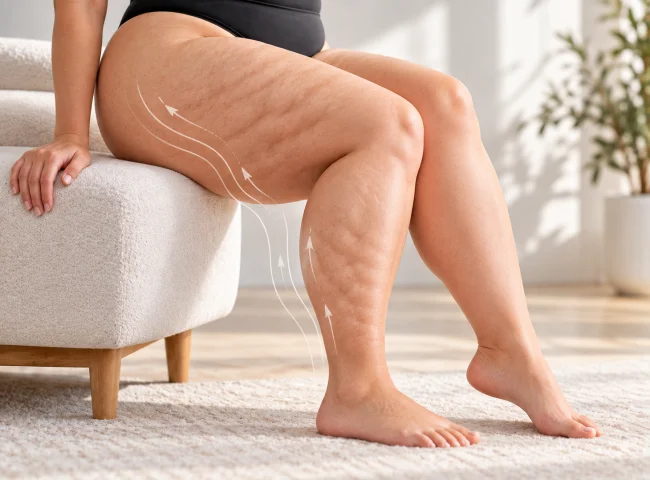
Lipedema is a chronic condition characterized by disproportionate, symmetrical and often painful accumulation of fatty tissue in specific areas of the body. It most commonly affects the hips, thighs and legs, although the arms may also be affected in some patients. The condition occurs almost exclusively in women.
An important point is that lipedema is not a matter of willpower or lifestyle. The affected fatty tissue does not respond to diet and exercise in the same way as typical body fat. Losing weight in your face, abdomen and arms while your legs remain largely unchanged can be a characteristic feature of lipedema.
Lipedema may be more common than previously thought; however, estimates of its prevalence vary between studies, and many patients are believed to remain undiagnosed. The inclusion of lipedema as a distinct disease in the World Health Organization's ICD-11 classification also reflects the increasing medical recognition of this condition.
What Are the Symptoms of Lipedema?
Symptoms may vary from person to person, but the most common features include:
- Symmetrical fat accumulation: Similar enlargement of both legs and/or arms, typically extending from the hips toward the ankles.
- Feet are spared: The fatty enlargement may appear to stop abruptly at the ankles, leaving the feet relatively unaffected. This appearance is sometimes referred to as a "cuff" or "bracelet" sign.
- Pain and tenderness: Pain may occur with touch or even mild pressure.
- Easy bruising: Noticeable bruising may occur even after minor trauma.
- Heaviness and fullness: These sensations may become more noticeable toward the end of the day and in hot weather.
- Weight distribution resistant to diet and exercise: The upper body becomes slimmer while the lower body changes less.
- Changes in tissue texture: Soft or sometimes nodular areas may be felt beneath the skin.
What Causes Lipedema?
The exact cause of lipedema has not yet been fully established. Current evidence points to several possible factors:
- Hormonal factors: The condition often begins or becomes more noticeable during puberty, pregnancy or menopause, suggesting a possible role for female hormones.
- Genetic predisposition: Many patients have a mother, aunt or sister with a similar condition.
- Changes in blood vessels and adipose tissue: Increased capillary permeability and inflammatory processes within adipose tissue are thought to play a role.
For this reason, letting go of self-blaming thoughts such as "This happened because I ate too much" or "I did not exercise enough" can be an important first step in the treatment journey.
Stages of Lipedema
Lipedema is generally described in four stages:
- Stage 1: The skin surface remains smooth and the fatty tissue is soft, but the amount of fat has increased.
- Stage 2: The skin surface becomes irregular and nodules within the fatty tissue become more noticeable.
- Stage 3: Fatty tissue becomes significantly increased and may become sagging, potentially causing limitations in movement.
- Stage 4 (lipo-lymphedema): Lymphedema develops in addition to lipedema.
Early diagnosis is important for appropriate management and may help slow the progression of the condition.
Lipedema, Obesity or Lymphedema?
Lipedema is often confused with other conditions:
- Obesity: Fat accumulation is generally distributed throughout the body and decreases in affected areas with weight loss. In lipedema, the affected areas tend to be resistant to weight loss. Both conditions can also occur together.
- Lymphedema: Swelling usually also affects the top of the foot and may often begin on one side. In lipedema, the feet are typically spared and the distribution is generally symmetrical.
- Venous insufficiency: Venous swelling and varicose veins may coexist with lipedema and should be evaluated separately.
You do not need to make this distinction on your own. A clinical examination can often provide important guidance.
How Is Lipedema Diagnosed?
Lipedema is primarily diagnosed through clinical examination. The onset of symptoms, family history, pain and bruising, body proportions and the condition of the feet are assessed together.
When necessary, methods such as ultrasound, lymphoscintigraphy or vascular imaging may be used to rule out similar conditions.
Every patient is unique. Therefore, the diagnosis and treatment plan should be individualized.
Lipedema Treatment: What Can Be Done?
Lipedema is a chronic condition, and treatment aims to reduce pain, slow progression, improve mobility and enhance quality of life. Treatment is generally approached in stages.
1. Conservative (Non-Surgical) Treatment
- Compression therapy: Properly fitted compression garments may help reduce pain and the sensation of heaviness.
- Manual lymphatic drainage and complete decongestive therapy: These approaches may be beneficial, particularly when swelling is present.
- Regular low-impact exercise: Swimming, water walking, cycling and brisk walking can support circulation without placing excessive stress on the joints.
- Balanced, anti-inflammatory-oriented nutrition: Diet alone does not treat lipedema, but it can help manage associated excess weight and support overall health.
- Skin care and psychological support: Being misunderstood for years can place a significant emotional burden on patients. Psychological support may also be part of comprehensive care when needed.
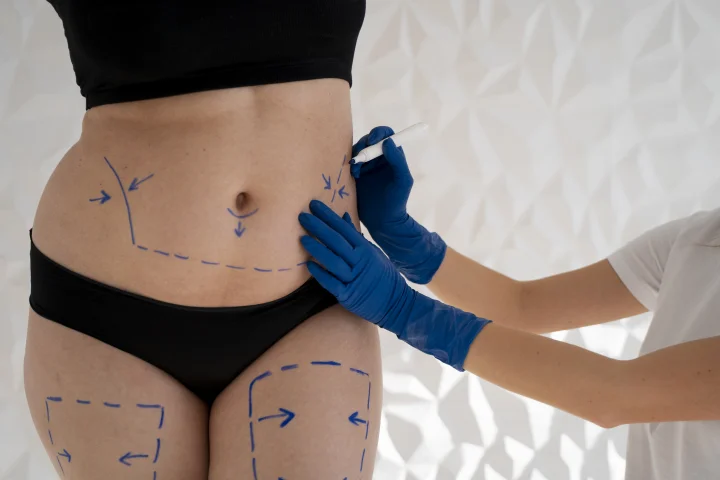
2. Surgical Treatment: Lipedema Liposuction
If pain, mobility limitations and reduced quality of life persist despite conservative treatment, surgical options may be considered.
The technique used in lipedema is different from liposuction performed purely for aesthetic body contouring. Gentle techniques designed to preserve lymphatic vessels, such as tumescent or water-assisted liposuction, may be preferred.
Scientific studies suggest that, in appropriately selected patients, these techniques may provide meaningful improvements in pain, bruising and quality of life. However, surgery should not be considered a "one-time cure" that completely eliminates the condition. Postoperative compression and regular follow-up remain important parts of treatment. More than one surgical session may sometimes be required.
The decision to undergo surgery should be made after a detailed examination, taking into account the stage of the condition, severity of symptoms, associated medical conditions and individual expectations.
How Can You Help Yourself While Living With Lipedema?
- Take your symptoms seriously and consult a specialist for an appropriate evaluation.
- Make physical activity part of your routine, while choosing activities that do not place excessive stress on your joints.
- Use the compression garments recommended by your doctor regularly.
- Do not judge yourself based on other people's comments about your weight or lifestyle.
- Avoid products and treatments that promise short-term "miracle" results.
Frequently Asked Questions About Lipedema
Does lipedema go away with diet?
No. A healthy diet is valuable for your overall health and can help manage associated excess weight. However, the fatty tissue affected by lipedema does not respond to diet and exercise in the same way as typical body fat.
Does lipedema get worse during pregnancy or menopause?
Hormonal changes may trigger or make the condition more noticeable. Symptoms may increase during these periods.
Can lipedema turn into cancer?
No. Lipedema is not a type of cancer and is not considered a condition that transforms into cancer.
Is lipedema surgery an aesthetic procedure?
No. The primary goal is not simply to reshape the body, but to reduce pain, symptoms and limitations in mobility. Improvements in body contour may also occur during the recovery process.
Can lipedema be completely cured?
Lipedema is a chronic condition. With appropriate management, symptoms can be significantly reduced and quality of life can be improved.
Which doctor should I see for lipedema?
Plastic surgeons, vascular surgeons, dermatologists and physicians experienced in lymphedema may evaluate patients with suspected lipedema. The important point is to consult a specialist who recognizes the condition and takes a comprehensive approach.
Lipedema Evaluation in Adana and Surrounding Provinces
If you are looking for lipedema evaluation in Adana, you can receive an individualized assessment of your symptoms, body proportions and treatment options. Patients from surrounding provinces may also apply for evaluation and treatment planning.
Patients from Mersin, Osmaniye, Hatay and Kahramanmaraş, as well as nearby areas, can also be evaluated for lipedema. During the consultation, the stage of the condition, severity of symptoms, distribution of fatty tissue, skin and tissue characteristics, and any associated conditions are assessed together.
If surgical treatment is being considered, it is important to plan not only the preoperative evaluation but also postoperative compression therapy and regular follow-up as part of the overall treatment process.
Conclusion: The Right Diagnosis Is the First Step Toward the Right Treatment
Lipedema is a condition that has been misunderstood for many years and has caused many patients to blame themselves. With early evaluation and an individualized treatment plan, it may be possible to reduce symptoms and improve quality of life.
If the symptoms described in this article sound familiar, do not wait to seek professional evaluation. You can contact us for information about lipedema evaluation and treatment options in Adana and surrounding provinces and to request an appointment.
Visit the contact page to learn more about lipedema evaluation and treatment options.
This article is intended for general informational purposes only and does not replace diagnosis or treatment by a physician. Please consult a doctor for an evaluation appropriate to your individual condition.